


Image: Collected
State Minister for Fisheries and Livestock Sultan Salauddin Tuku has stated that, once domestic demand is met, initiatives will be taken to export meat to international markets, including those in the Middle East. He further mentioned that the government is providing various incentives and support to encourage farmers in this regard.
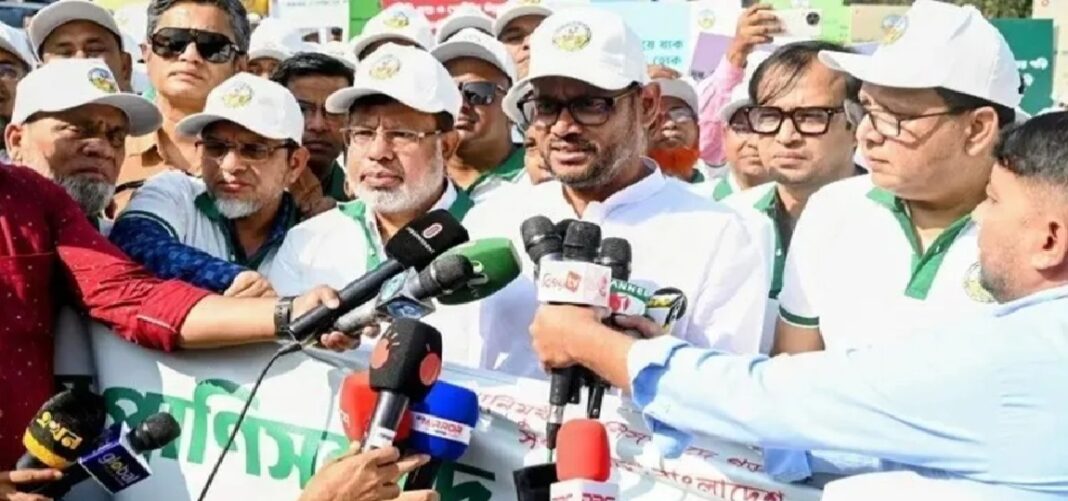
The State Minister made these remarks on Friday morning (November 27) at the inaugural ceremony of a grand rally held in the capital to mark ‘National Livestock Week-2026’.
The rally was organized on Manik Mia Avenue, adjacent to the South Plaza of the National Parliament House. The State Minister stated that the livestock sector plays a vital role in the nation’s economy, nutritional security, and job creation. Millions of people are involved in this sector, either directly or indirectly.
He further stated that the development and expansion of the livestock sector are enabling people living in *char* (riverine island) areas to become economically self-reliant. The government has undertaken various initiatives to harness the potential of this sector, with the aim of further strengthening the rural economy.
Noting that the government is working to meet the nation’s demand for meat by increasing production in the livestock sector and providing necessary support to farmers, the State Minister expressed optimism that, in the future, it will be possible to export meat to international markets after fulfilling domestic demand.
The rally, which began at the South Plaza of the National Parliament House, traversed Manik Mia Avenue and concluded at the old Trade Fair grounds.
Participants in the rally included Md. Delwar Hossain, Secretary of the Ministry of Fisheries and Livestock; Md. Shahzaman Khan, Director General of the Department of Livestock Services; and other senior officials from the ministry and the department.
Additionally, the rally saw the participation of Dr. Md. Abdur Rahim, Acting President of the Veterinary Doctors Association of Bangladesh (VDAB), along with other members of the organization; officials and employees from various departments and agencies; representatives of ethnic minority groups; farmers; entrepreneurs; and individuals from diverse professional backgrounds associated with the livestock sector.