

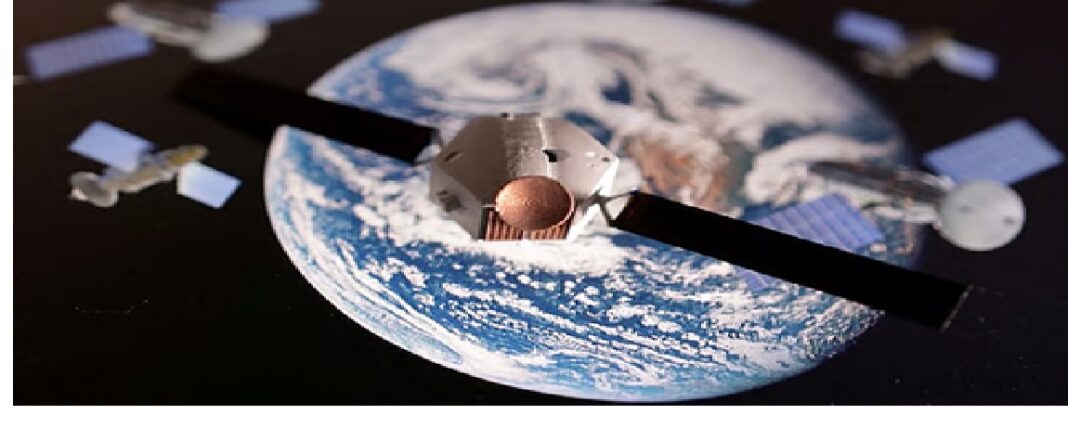

A model of a satellite placed on an image of the Earth. Symbolic image: Reuters
The United States has approved a plan by billionaire Elon Musk—founder of the space technology, space transport, and artificial intelligence (AI) company SpaceX—to launch one million satellites. This initiative comes amidst ongoing debates surrounding data centers, as efforts intensify to find alternative infrastructure to support the advancement of the AI revolution.
Last Wednesday, the U.S. Federal Communications Commission (FCC) granted approval for this project, dubbed “StarMind.” The agency noted that this is the first instance of its kind in the nation’s history.
In a statement posted on the social media platform X, FCC Commissioner Brendan Carr remarked, “At this critical juncture in the development of super-intelligence, the FCC is authorizing SpaceX to deploy one million compute modules into orbit. These will process vast amounts of data for use here on Earth.”
Brendan Carr further added that, under the leadership of President Donald Trump, the United States is “moving boldly forward to ensure that this groundbreaking technology creates opportunities, drives investment, and delivers benefits to the American people.”
Data centers serve as the fundamental infrastructure for AI computing, and the demand for AI software is growing rapidly. In this context, Musk’s plan offers an alternative approach: utilizing the sun as an energy source for these AI data centers.
What is Musk’s plan?
Data centers are the essential foundation for AI computing. With the demand for AI software rising quickly, Musk’s proposal provides an alternative solution—using the sun as a power source for these data centers.
According to SpaceX, securing sources of electrical power on Earth is becoming increasingly difficult. In such a scenario, this represents the fastest way to expand the range of available energy sources.
On its website, SpaceX describes this plan as both “low-cost” and “high-capacity.”
Musk’s company already has satellites in space; ‘Starmind’ is expected to be a new addition to that existing satellite constellation.
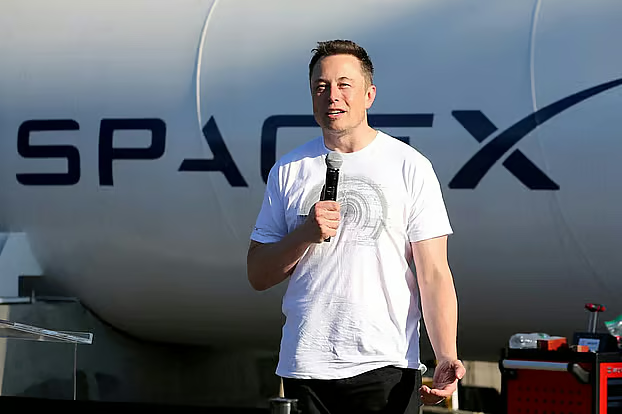
Elon Musk. File photo: Reuters
According to data from SatFleet Live, which tracks satellite positions in real time, there are currently approximately 16,928 active satellites in orbit. Of these, 11,190 (66 percent) belong to Starlink, the internet service provider operated by SpaceX.
Under the terms of its FCC license, SpaceX is required to begin the deployment of its satellite constellation by November 2033. Subsequently, by November 2035, it must have launched 10 percent of its total authorized capacity—amounting to 100,000 satellites. Furthermore, 50 percent of the constellation must be deployed by November 2038, with the entire satellite fleet required to be in orbit by 2040.
According to an article published in 2025 by the U.S.-based non-profit organization, the Environmental and Energy Study Institute, large data centers can consume up to 5 million gallons of water per day—an amount equivalent to the daily water consumption of a city with a population of 10,000 to 50,000 people.
Why does Musk want to send data centers into space, and what are the potential benefits?
As the scope of artificial intelligence (AI) expands rapidly, the demand for data centers is also growing.
However, data centers require vast amounts of space and consume significant quantities of water and electricity. Furthermore, they are responsible for substantial carbon emissions derived from the use of fossil fuels.
Data centers generate intense heat, and their cooling systems—essential for keeping the technology operational—require massive amounts of water. This places a strain on water supplies and affects communities already grappling with drought—a situation exacerbated by rising global temperatures due to climate change.
As noted in the 2025 article by the Environmental and Energy Study Institute, “Large data centers can consume up to 5 million gallons of water per day. This volume is equal to the daily water usage of a city with 10,000 to 50,000 inhabitants.”
These concerns have sparked widespread protests against data centers in various locations, ranging from the United States to Kenya and India.
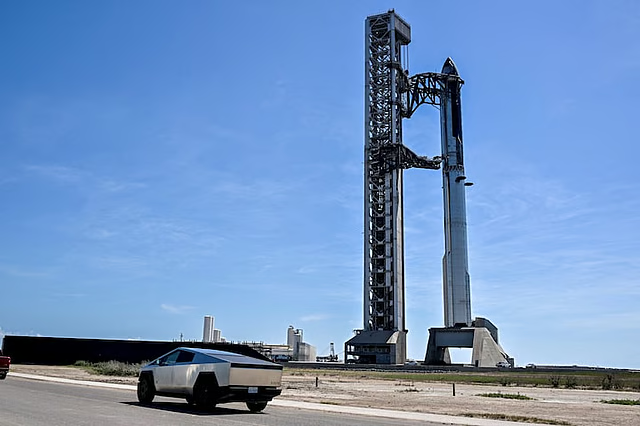
A Tesla Cybertruck passes by Pad-2 at Starbase—SpaceX’s rocket production, testing, and launch site. Starship 41 is mounted atop the Super Heavy V3 Booster 21 on the pad. Texas, USA. September 27, 2026. Photo: Reuters
According to survey data, this widespread opposition to data centers was a key issue for many voters during the U.S. midterm elections earlier this month.
Last July, as part of a nationwide movement against the rapid expansion of AI infrastructure, protesters opposed to data centers held 142 demonstrations across 42 states.
In the case of satellite-based data centers, there are no such land-related constraints. Theoretically, they could also utilize solar energy as a power source—a concept mentioned in SpaceX’s plans.
However, keeping data centers cool in space presents a major challenge; since there is no air or water—as there is on Earth—the heat generated cannot be dissipated through conduction or convection.
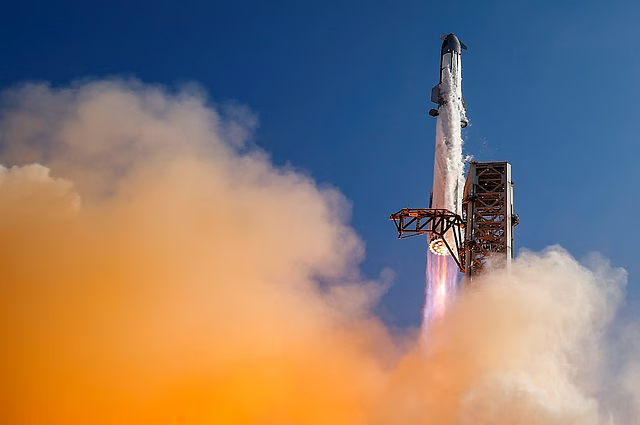
Starship and the Super Heavy V3 booster soar through the sky during a test flight from SpaceX’s launch site at Starbase. Texas, United States. July 24, 2026. Photo: Reuters
Objections to the Plan
Astronomers and environmentalists have criticized Musk’s plan. They argue that it will increase pollution in the sky, making it even more difficult to observe the night sky.
In a statement released last Wednesday, the American Astronomical Society (AAS) expressed that it was “disappointed and dismayed” by the FCC’s decision to approve the plan.
The statement further noted that, in documents previously submitted to the FCC, the AAS had warned that the proposed satellite constellation would, firstly, severely damage decades of public investment in astronomical research infrastructure and, secondly, hinder the ability of both astronomers and the general public to enjoy and study the night sky.
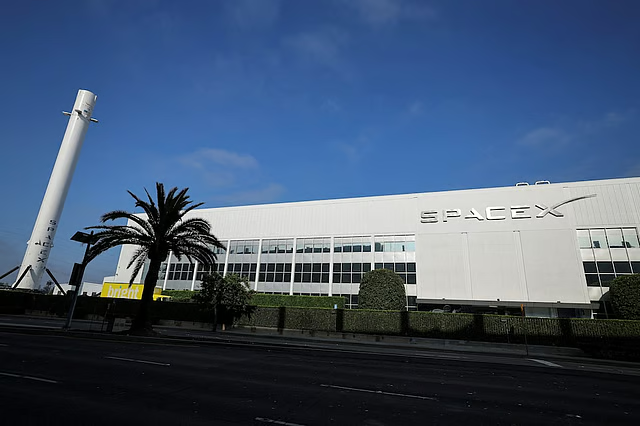
SpaceX facility in Hawthorne, California, USA, June 12, 2026. Photo: Reuters
The AAS is deeply concerned about the future of publicly funded astronomical research under such a fundamentally altered night sky. The statement also notes their concern regarding the potential waste of taxpayer funds invested in astronomical research infrastructure globally.
The statement reads, “We hope that SpaceX will maintain coordination with the National Science Foundation. However, we are concerned that there is no formal requirement for such coordination included in the licenses granted to SpaceX.”