

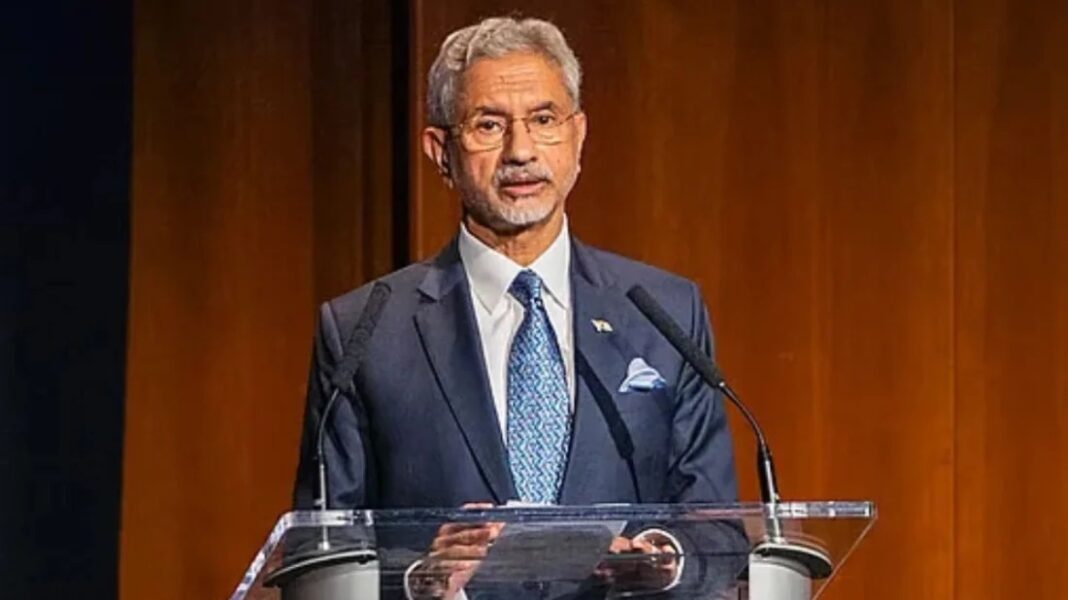

Photo: Collected

Indian Foreign Minister S Jaishankar has expressed grave concern over the possibility of a severe food crisis in South and Southeast Asia in the coming months due to the US-Iran war and international tensions. He warned that the ongoing conflicts in Ukraine and the Middle East were disrupting the global supply of fertilizers, which is leading to a severe food crisis.
S Jaishankar made the remarks while participating in an open discussion organized by the Asia Society in New York, USA, on Monday. He noted that the current regional geopolitical conflicts are creating severe psychological and economic pressure on the economies of the ‘Global South’ or the underdeveloped and developing countries of the world.
Highlighting the overall impact of the ongoing conflict, the Indian External Affairs Minister said that the Ukraine war and the current Iran-Gulf conflict have had a very negative and devastating impact on the emerging economies of the Global South. Discussing the instability in the world’s energy markets, he said that the international supply chain is currently facing a two-pronged crisis. The tendency to seek political benefits rather than keeping energy prices stable is compounding the problem. He warned that if someone plays political games with this, it will only increase instability and complexity in the market.
Jaishankar highlighted the stagnation in the Black Sea region in the transport of essential agricultural inputs such as fertilisers and food grains. He said that some of the world’s leading food grain exporting countries are unable to export their products and it has become almost impossible to continue exports through sea routes in the Black Sea region. Since the world’s main fertiliser producing centres are located in the Middle East and Russia, there is a shortage there. This, coupled with adverse weather patterns like ‘Super El Nino’, is pushing food security to the brink.
Explaining the overall crisis, Jaishankar said that a huge food crisis is going to emerge in the coming months. Behind this, the energy crisis, food and fertilizer shortages and capital crisis will work. Because, when a major war or conflict starts, investment money tends to go to safe havens and currently, capital is flowing out of the Global South. As a result, a very difficult and critical situation is arising for poor and developing countries.
Strongly criticizing the selfish decisions of powerful countries, the Indian Foreign Minister said that the influential countries of the world should not be so selfish that they take decisions only for the benefit of their own personal circle and raise the tone of shirking their responsibilities towards the rest of the world. He called on the influential countries to be sensitive to the basic needs of poor countries while maintaining a minimum of common sense.
Referring to the political instability that has already occurred in South Asian countries as a result of the energy crisis, he said that after the Ukraine war, political instability has been seen in neighboring countries as a direct result of this. He fears that what is currently happening in Iran and the Persian Gulf region will further inflame regional political instability and further complicate the crisis.
On how developing countries will overcome this recession and crisis, Jaishankar said that it will be very difficult for some countries to cope with this situation. Therefore, strategically autonomous countries want many more countries to become self-reliant. However, there is no single or simple equation for this. The exact steps these countries will take will depend on how much their specific problems and interests are involved.